
upgraded ship photo,1917
dreadnought 1916 during upgrade

hms dreadnought 1910 photograph
1906 during the trial of gunnery
hms dreadnought in 1907


bridge tripod mast pictures
forward 12inch guns photo

hms dreadnought viewed from tripod masts bows


side battery pics
HMS Dreadnought of the Royal Navy was a battleship build in 1906. Dreadnought represented marked advance in naval technology , the "dreadnoughts", as well as the class of ships named after her is an entire generation of battleships
Dreadnought was the first battleship of her era to have a uniform main battery, She was also the first capital ship to be powered by steam turbines, making her the fastest battleship in the world at the time of her completion.
Displacement: 18,420 tons
dimensions
Length: 527 ft (161 m)
Beam: 82 ft (25 m)
Draught: 26 ft (7.9 m)
Propulsion: 18 3-drum water-tube boilers
Parsons single-reduction geared steam turbines
22,500 shp on 4 shafts
Speed: 21 kt (39 km/h)
Range: 900/2,900 tons coal, 1,120 tons oil,
6,620 nmi (12 260 km) at 10 kt (19 km/h)
4,910 nmi (9090 km) at 18.4 kt (34 km/h)
Complement: 695–773
weapon: 10 x BL 12inch (304.8 mm) Mk X guns, 5 twin B Mk.VIII turrets (one forward, two aft, two wing)
27 × 12-pdr 18 cwt L/50 Mk.I guns, single mountings P Mk.IV
5 × 18 in (457 mm) submerged torpedo tubes
Armour: Belt: 4 to 11 in (100 to 280 mm) midship, 2.5 in (64 mm) at ends
Deck: up to 3 in (75 mm)
Turrets: 11 in (280 mm)
Barbettes: up to 11 in (280 mm)
Conning tower: 11 in (280 mm)
Saturday, January 10, 2009
hms dreadnought wallpapers
Friday, January 9, 2009
royal navy Antarctic patrol ship wallpaper


HMS Endurance a171 is the Royal Navy's Antarctic ice patrol ship. She is a class 1A1 icebreaker
Displacement: 6,100 t (6,004 long tons)
Length: 91 m
Beam: 17.9 m
Draught: 8.5 m
Propulsion: 2 × Bergen BRG 8 Diesels, 8,160 hp (6,085 kW)
Speed: 14 knots (26 km/h; 16 mph)
royal navy Archer class coastal training craft

HMS Example (P165) seen here on the River Tyne at Newcastle Upon Thne (North East England) - photograph take 22nd September 2004
HMS “Archer” P264 and HMS “Explorer” P164 at Bangor


HMS Charger and HMS Biter seen here berthed at HMS Calliope on the Tyne (North East England) 30th June 2006

RAIDER"Archer" class coastal training craft seen at Portsmouth
Class and type: Archer class patrol vessel
Displacement: 49 tons
Length: 20.8 m (68 ft 3 in)
Beam: 5.8 m (19 ft)
Draught: 1.8 m (5 ft 11 in)
Propulsion: 2 shafts, Rolls Royce Perkins CV12 Turbo diesels, 1,200 bhp (895 kW)
Speed: 18 knots
uk River Class Offshore Patrol Vessel wallpapers

HMS Tyne arriving at Portsmouth
John Feltham 2006/8/6]River Class Fishery Protection Vessel, HMS Mersey, entering Portsmouth Harbour 1010hrs on 6th August, 2006 at the end of a tour of duty
The Royal Navy HMS TYNE Patrol Boat alongside Queens wharf, Falmouth, Cornwall
HMS TYNE (P281) arriving Falmouth, Cornwall - coming alongside County wharf shadowed by the Falmouth tug PECUILHMS TYNE is the first of the River Class Offshore Patrol Vessels (OPVs) built for Fishery Protection around the UK.These OPVs, including sister ships HMS Severn and HMS Mersey, are taking over from the Island Class. HMS Tyne was built in Woolston Docks, Southampton and is based at HM Naval Base Portsmouth.The current HMS Tyne is the sixth ship to bear the name in the Royal Navy.

The Offshore Patrol Vessel HMS TYNE (P281) alongside County Wharf, Falmouth, Cornwall
Thursday, January 8, 2009
british battlecruiser hms Renown pictures


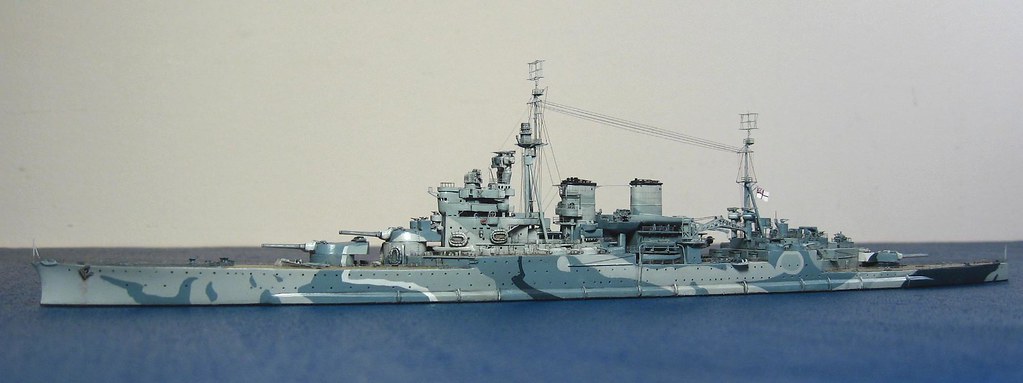
HMS Renown ship model

HMS Renown, lead ship of a class of two 26,500-ton battlecruisers, was built at Glasgow, Scotland. Completed in September 1916, she served with the Grand Fleet in the North Sea during the remaining two years of World War I. In 1920-21, following a refit, she carried the Prince of Wales on a voyage to Australia and America. During 1923-26, she was extensively refitted to increase her protection against gunfire and torpedoes. After a decade of further service, Renown was again reconstructed, greatly changing her appearance and giving her a modern anti-aircraft gun battery, much enhanced aircraft-handling facilities and up-to-date gunfire controls. This work was completed in September 1939, just after the outbreak of the Second World War.Renown's high speed made her a valuable asset during World War II. In late 1939, she was sent to the South Atlantic to search for the German armored ship Admiral Graf Spee. She covered minelaying operations along the Norwegian coast in early April 1940 and, on the 9th of that month, engaged the German battleships Scharnhorst and Gneisenau, damaging the latter. Later in 1940 and into 1941, she operated with Force "H", based at Gibraltar to provide strategic presence in both the Atlantic and Mediterranean. While with Force "H", she participated in a bombardment of Genoa, Italy, in February 1941. After Home Fleet service in 1942-43, Renown was sent to join the Eastern Fleet in the Indian Ocean. Operating from Ceylon in 1944-45, she helped contain the Japanese in the East Indies. HMS Renown had brief post-war service in British waters and was sold for scrapping in March 1948.
Class and type: Renown class battlecruiser
Displacement: 32,000 tons
Length: 794 ft
Beam: 90 ft
Draught: 31.75 ft
Propulsion: Geared turbines, 4 shafts, 120,000 shp
Speed: 31 knots (57 km/h)
Range: 3,650 miles (5870 km)
Complement: 1,181 officers and men
Armament: 6 × 15 inch naval gun (3×2)
20 × 4.5 inch (114 mm) (10×2)
24 × 2-pdr (40 mm) pom-pom (3×8)
20 mm AA (number varied)
Aircraft carried: 4
Aviation facilities: 1 double-ended catapult launcher
Wednesday, January 7, 2009
HMS Tiger ww1 battlecruiser


just before Repulse and Renown... very much like them in fact... only one of this class... closer to Kongo which the Japanese had built in the UK... made Royal Navy mad that their builders built better ship than they had so the Tiger was built
HMS Tiger was a battlecruiser of the Royal Navy, built by John Brown and Company, Clydebank, Scotland, and launched in 1913. Tiger was the most heavily armoured battlecruiser of the Royal Navy at the start of World War I
Displacement:
33,677 tons full load
Length: 704 ft (215 m)
Beam: 90.6 ft (27.6 m)
Draught: 28.5 ft (8.7 m)
Propulsion: 4 shaft Brown-Curtis turbines, 85,000 shp
Speed: 28 knots
Complement: 1,109
Armament: 8 × 13.5 inch (343 mm) Mk V naval guns
12 × 6 in 152 mm Mk VII guns
2 × 3 in (76 mm) anti-aircraft guns
4 × 3 lb guns
4 × 21 in (533 mm) torpedo tubes
Armour: Belt: 9 inch
Bulkheads: 5 in
Barbettes: 9 in
Turrets: 9 in
Decks: 3 in
HMS Cressy armoured cruiser


HMS Cressy was a Cressy-class armoured cruiser in the british Royal Navy. Cressy was sunk by the German U-boat U-9 in September 1914.
HMS Dreadnought battleship pictures


HMS Dreadnought of the Royal Navy was a battleship design by Admiral Sir John "Jackie" Fisher, who became First Sea Lord in 1904, Fisher had originally advocated a Royal Navy based around submarines and fast torpedo boats, and had subsequently tempered his revolutionary ideas with a vision of fast, all-big-gun battlecruisers, which would have the firepower and speed to engage battleships and cruisers, albeit with much less armour protection than the former. Fisher felt that speed was a better defence than armour. Although the battlecruiser concept would become popular in the run-up to World War I, Fisher was nonetheless forced by the Admiralty to create an all-big-gun battleship instead.Dreadnought was laid down and assembled with unparalleled speed in Portsmouth Royal Dockyard. She was laid down on 2 October 1905, and completed just 14 months later in December 1906. Dreadnought represented such a marked advance in naval technology that her name came to be associated with an entire generation of battleships, the "dreadnoughts", as well as the class of ships named after her, while the generation of ships she made obsolete became known as "pre-dreadnoughts".
Dreadnought was the first battleship of her era to have a uniform main battery, rather than having a few large guns complemented by a heavy secondary battery of somewhat smaller guns. She was also the first capital ship to be powered by steam turbines, making her the fastest battleship in the world at the time of her completion.



