

SD551 (EA-18G-1) During Initial Sea Trial on aircraft carrier USS Eisenhower
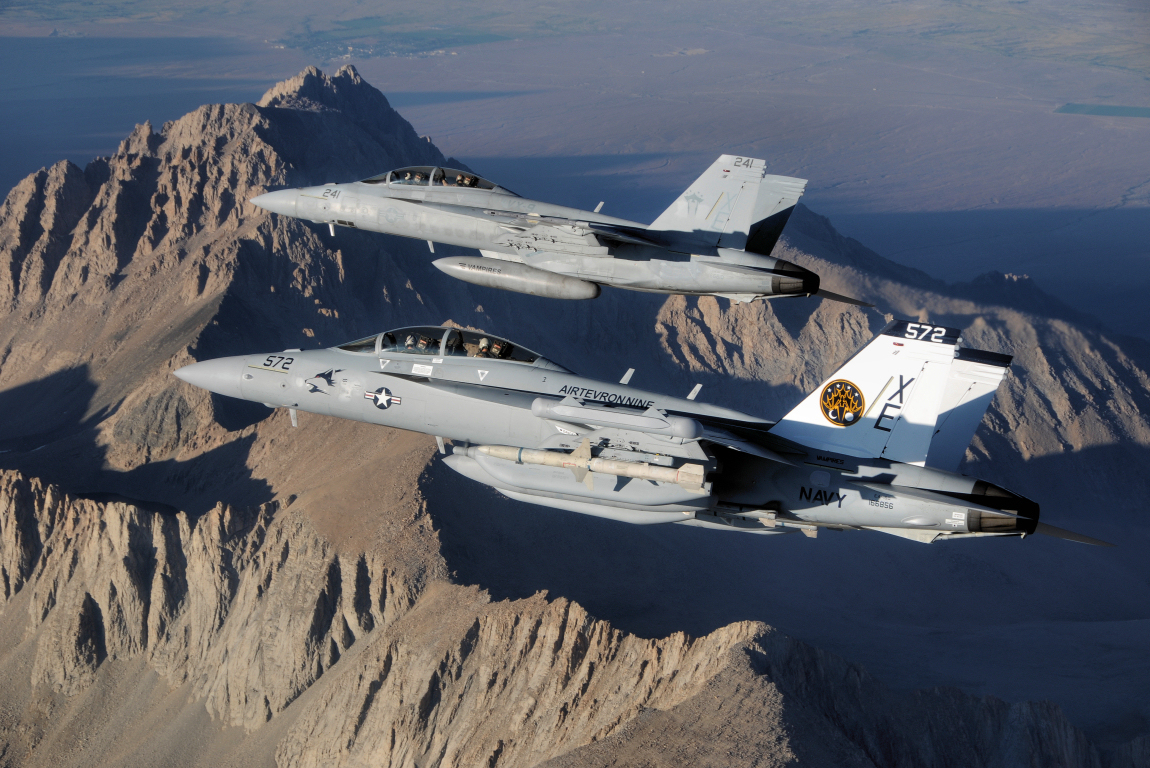
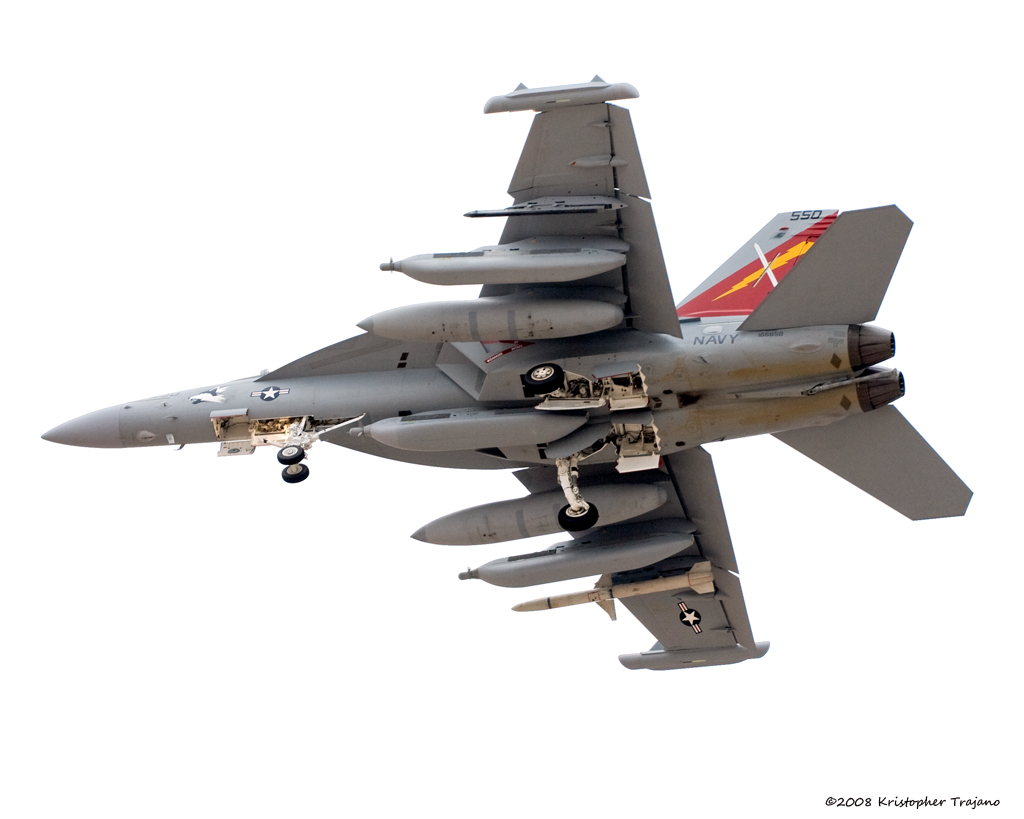
Boeing EA-18G Growler 166895 VAQ-129 Vikings NAS Whidbey Island WA Taxiing out at NAF El Centro CA

Landing Nellis AFB, Las Vegas
Aircraft: Boeing EA-18G Growler (166897)Unit: VAQ-129 "Vikings"Base: NAS Whidbey Island, WA That is NOT a Super Hornet !! the brand new EA-18G Growler, the substitute of the EA-6B Prowler. Looks like the Rhino, but note the wingtips and the ALQ-99 jammer pods. AN/ALQ-218 (V)2 wideband receiver wingtip pod detail on a Boeing EA-18G Growler 166893 from VAQ-129 Vikings NAS Whidbey Island at NAF El Centro
Showing posts with label navy aircraft. Show all posts
Showing posts with label navy aircraft. Show all posts
Sunday, August 23, 2009
EA-18G Growler wallpapers
Friday, August 21, 2009
F-14 fighter jet wallpapers


2) Northern Iraq (Apr. 11, 2003) -- A U.S. Navy Grumman F-14 Tomcat assigned to Carrier Air Wing Three onboard USS Harry S. Truman (CVN 75), flies a combat mission in direct support of Operation Iraqi Freedom.
A F-14 Fighter aircraft (VF-143) "Pukin Dogs" receives final maintenance before evening flight operations on the flight deck of USS GEORGE WASHINGTON (CVN73).
An F14D Tomcat assigned to the "Blacklions" of Fighter Squadron Two One Three (VF-213) launches from USS Theodore Roosevelt (CVN 71).

An F14D Tomcat from Fighter Squadron Three One (VF-31), the “Tomcatters,” performs a fly by past the Nimitz-class aircraft carrier USS Dwight D. Eisenhower (CVN 69). The Grumman F-14 Tomcat is a supersonic, twin-engine, variable sweep wing, two-place strike fighter. The Tomcat's primary missions are air superiority, fleet air defense and precision strike against ground targets.(4) U.S. Navy photo by Paul Farley

An F14D Tomcat assigned to the "Tomcatters" of Fighter Squadron Three One (VF-31) launches from the flight deck of aircraft carrier


 Arabian GulfAboard USS Theodore Roosevelt (CVN 71)Sailors part of Fighter Squadron Three One (VF-31) prepares to do maintenance on an F-14 Tomcat on the flight deck of USS Theodore Roosevelt (CVN 71). The nuclear powered aircraft carrier and embarked Carrier Air Wing Eight are currently underway on a regularly scheduled deployment conducting maritime security operations.
Arabian Gulf (July 09, 2004) - An F-14D Tomcat fighter jet assigned to the Jolly Rogers of Fighter Squadron (VF 103) and an F/A-18C Hornet assigned to the Sunliners of Strike Fighter Squadron Eight One (VFA 81) makes final preparation for launch from the flight deck of USS John F. Kennedy (CV 67). USS John F. Kennedy Strike Group currently on a regularly scheduled deployment, is taking part in Summer Pulse 04.

OVER IRAQ -- An F-14 Tomcat flies through the sky during a combat mission August 14 in support of Operation Iraqi Freedom. (U.S. Air Force photo by Staff Sgt. Lee O. Tucker 

F14 tomcat in the Gulf War


A Fighter Squadron 74 (VF-74) F-14A Tomcat aircraft taxis past three other Tomcats on the flight deck of the aircraft carrier USS SARATOGA (CV-60)
An F-14 Tomcat assigned to the "Swordsmen" of Fighter Squadron (VF) 32 launches off the number two steam powered catapult aboard the Nimitz-class aircraft carrier USS Harry S. Truman (CVN 75). Currently, aircraft from Carrier Air Wing (CVW) 3 embarked on Truman are providing close air support and conducting Intelligence, Surveillance and Reconnaissance (ISR) missions in ongoing operations. The Harry S. Truman Carrier Strike Group and CVW-3 are currently on a regularly scheduled deployment in support of the global war on terrorism.
An AIM-54C Phoenix missile and two chaff and flare dispensers sit on skids beside a Fighter Squadron 103 (VF-103) F-14A Tomcat aircraft on the flight deck of the aircraft carrier USS SARATOGA (CV-60) during gulf war.
An F-14A Tomcat aircraft refuels from a U.S. Air Force KC-10A Extender aircraft as other Tomcats fly in formation, during Operation Desert Storm. Squadrons represented by the aircraft are, from foreground: Fighter Squadron 33 (VF-33), Fighter Squadron 84 (VF-84) and Fighter Squadron 14 (VF-14).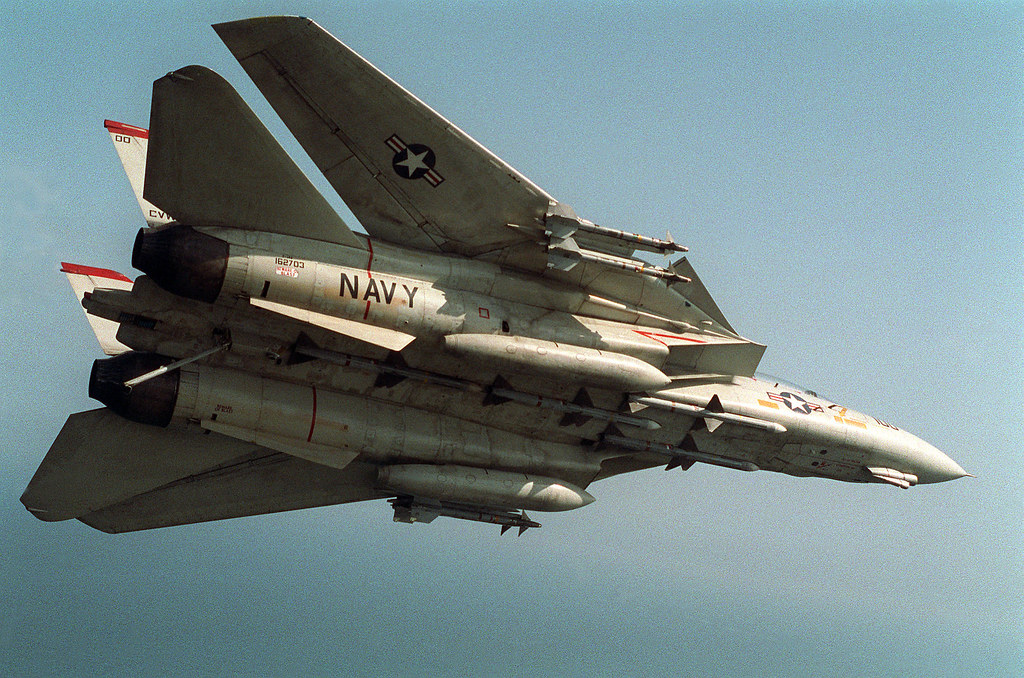

Three Fighter Squadron 32 (VF-32) F-14A Tomcat aircraft fly in formation over the desert during gulf war. VF-32 is based aboard the aircraft carrier USS JOHN F. KENNEDY (CV-67).
An F-14 Tomcat aircraft of Fighter Squadron 103 (VF-103) prepares for refueling during gulf war. The aircraft is armed with AIM-7 Sparrow and AIM-9 Sidewinder missiles.
Action in Desert Storm--
As an air-to-air fighter, the F-14 did not get to see much of the Iraqi Air Force given their destruction and their desire not to fly.Fleet deliveries of Navy F-14D fighters began in March 1990, but the fighters did not have a defensive system to jam signals from radar-guided missiles homing in on the aircraft. F-14's were used to provide combat air patrols over attacking carrier based aircraft and their ships, an F-14A from VF-103 was shot down by an SA-2 surface-to-air missile while on an escort mission near Al Asad airbase in Iraq. A total of 4,124 sorties were flown by the 99 F-14 Tomcats deployed to the Gulf.for a total of 14,248 flight hours.
P-8A poseidon navy patrol aircraft

Second P-8A Poseidon for the United States Navy. Line 2814, Cn# 34396. Will flight test with registration N441BA.P-8's markings are a lot more visible than the E-6's.Then again, the E-6 is a "TACAMO" plane and the P-8 is a maritime patrol bird...less secrecy than an E-6.
B737 P-8A Poseidon
US Navy next long-range anti-submarine warfare, anti-surface maritime patrol and reconnaissance aircraft, the P-8A Poseidon, The P-8A is a derivative of boeing 737-800 and has the wings of a 737-900. The P-8A will carry the MK 54 Torpedo Anti-Submarine weapon
General Characteristics
Primary Function: Anti-Submarine and Anti-surface Warfare
Contractor: Boeing IDS
Date Deployed: First squadron is planned for 2013.
Propulsion: Two high-bypass CFM56 turbofan engines
Length: 129.5 feet (39.47 meters)
Height: 42.1 feet (12.83 meters).
Wingspan: 117.2 feet.
Weight: Maximum gross takeoff, 188,200 pounds
Airspeed: 490 knots.
Ceiling: 41,000 ft.
Range: 1,200 nautical miles radius with four hours on station.
Crew: Nine.
Armament: Torpedoes, cruise missiles, bombs, mines


Subscribe to:
Posts (Atom)


